If you’ve been tasked with buying a new pinewood derby track for your pack, club, church, school, or community group, you already know how much is riding on the decision. Here’s how to choose one that’s fair, durable, and easy to run — from the people who build them.
A pinewood derby is often the highlight of the year for kids and parents alike. When the race runs smoothly, it’s a magical, high-energy event. When the track is warped, the lanes are unfair, or the finish is disputed, a fun weekend turns frustrating in a hurry.
As the people who build these tracks, we know that buying a professional-grade track is a real investment for a volunteer-run organization. You’re not just buying pieces of plastic or metal — you’re investing in equipment that needs to deliver fair, exciting racing for years, often for a decade or more. This guide walks you through the whole decision: material, lane count, space, cost, and the timing and software that make race day run itself.
How Many Lanes Do You Need?
One of the first decisions when shopping for a pinewood derby track for sale is the number of lanes. Tracks are built with anywhere from one to eight lanes, and the right choice depends mostly on the size of your group and how quickly you want to move through your heats.
Small groups (under 30 racers)
For a small pack, youth group, or neighborhood race, a 2- or 3-lane track is often plenty. Fewer lanes keep the focus tight, make it easy for younger kids to follow their own car, keep upfront cost lower, and take up less floor space. The trade-off is that it takes more heats to cycle through everyone — fine for a small roster, slower as your group grows.
Medium groups (30 to 60 racers)
For the average Cub Scout pack or school event, a 4-lane track is the sweet spot. You get enough cars racing at once to make heats exciting, and you can move through a moderate roster efficiently. A 4-lane setup is also easy on volunteers — you typically only need two people at the starting gate to load cars quickly.
Large groups and district races (60+ racers)
Hosting a large pack, a multi-pack district derby, or a big corporate event? Consider a 6- or 8-lane track. More lanes let you race more cars at once, cutting the total length of the event. Just plan for the trade-offs: larger tracks need a wider footprint, cost more, and require more volunteers to stage and retrieve cars. You have to stay organized to keep a big race flowing without bottlenecks.
Aluminum vs. PVC vs. Wood: Which Track Material Is Best?
Your track’s material determines its lifespan, how fair the racing is, and how much your volunteers grumble at setup. The choice generally comes down to three materials: wood, aluminum, and PVC plastic. As a US-based manufacturer we build with precision-machined PVC — but here are the honest pros and cons of each so you can choose what fits your group.
The classic: wood tracks
Many organizations start with a homemade wooden track. They’re nostalgic, and a skilled carpenter in your group can build one for the cost of materials.
The pros: low initial cost if a volunteer builds it; classic look.
The trade-offs: wood is heavy and bulky, which makes storage and transport a chore. More importantly, wood reacts to its environment. A wooden track stored in a damp basement or hot garage will eventually warp, twist, and swell — and once it warps, the lanes become uneven and cars start drifting or jumping the lane guides. Wooden tracks also need periodic sanding to prevent splinters and slow spots.
The metal option: aluminum tracks
Aluminum tracks are a popular commercial upgrade from wood, offering a fast, consistent surface.
The pros: aluminum is fast and slick, it doesn’t warp from humidity, and it’s lighter than a comparable wooden track.
The trade-offs: aluminum tends to be louder — the metal can amplify wheel noise in an echoing gym. A section can dent or kink if it’s dropped or mishandled, and a bent extrusion is hard to straighten. Aluminum also conducts heat, so a track left in direct sun can get hot to the touch, worth considering for outdoor races.
The modern standard: precision PVC tracks
At Derby Magic we manufacture our pinewood derby tracks from high-grade, precision-machined PVC, which we’ve found to be an excellent fit for most volunteer-run organizations.
The pros: PVC is smooth and fast — comparable to aluminum for speed — and it tends to run quieter, absorbing vibration rather than amplifying it. It won’t warp, twist, or rot with humidity, so it holds a fair, flat racing surface season after season. It’s lightweight, so a single volunteer can carry a section, and it tends to flex and return to shape rather than take a permanent dent in transport. It also stays cooler than metal in direct sun, which helps for outdoor events.
The trade-offs: like any plastic, PVC can become brittle if it’s stored in extreme, sub-freezing cold and then handled roughly before it warms up — so let a cold track acclimate to room temperature before assembly.
Material comparison
| Feature | Wood | Aluminum | Precision PVC |
|---|---|---|---|
| Durability | Low (chips, splinters) | High (can dent if dropped) | High (resists denting; flexes back) |
| Lane fairness | Low (warps over time) | High | High |
| Weight & portability | Very heavy | Lightweight | Lightweight |
| Warping risk | High (humidity) | None | None |
| Heat & sunlight | Fair | Fair (conducts heat) | Good (stays cooler) |
| Storage | Needs climate control | Tolerant (protect from drops) | Tolerant (avoid deep-freeze + rough handling) |
How Long Should the Track Be, and How Much Floor Space Do You Need?
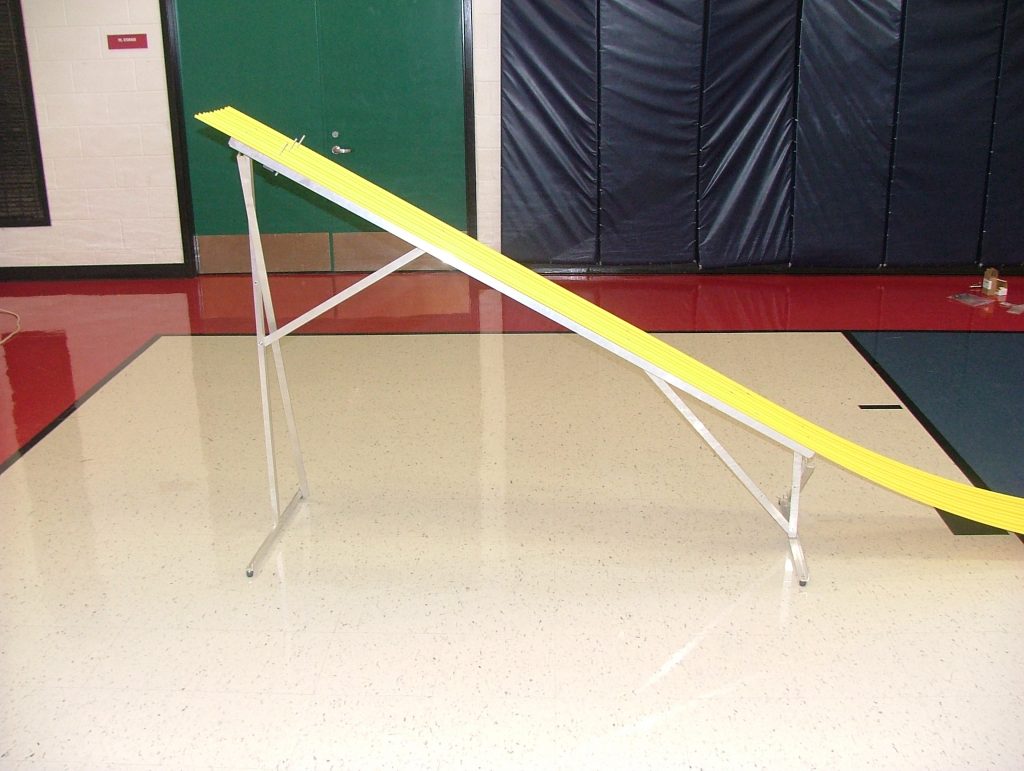
Organizers often underestimate the footprint needed to run an event safely. Derby Magic tracks are built in several lengths — typically 32 to 44 feet depending on the model — from sections about 6 feet long, followed by a dedicated brake section (about 4 feet) that safely slows and catches the cars. A longer track lets cars reach higher speeds and separate more before the finish; a track that’s too long for your room risks slower cars stopping short. For exact lengths and section options, see our track dimensions guide and track comparison page.
When you plan your space, remember the racing surface is only part of the equation. Budget room for the staging area behind the starting gate, the brake section (about 4 feet past the finish) plus room to retrieve cars, and a comfortable spectator margin on both sides.
As a planning rule of thumb, allow the track’s length plus about 10 feet — roughly 4 feet for the brake section and a few feet each for staging and retrieval. So a 32-foot track wants about 42–46 feet of clear floor, and a 44-foot track about 54–58 feet, before you add side room for spectators.
What Does a Pinewood Derby Track Cost?
Funding a new track is often a group-wide effort, sometimes with a dedicated fundraiser. View the cost as a long-term investment: a quality track serves your organization for many years, spreading the cost across hundreds of future racers.
Broadly, expect the investment to range from a few hundred dollars for a small, single-lane setup up to around two thousand dollars for a large, multi-lane system with premium electronic options. Your final price is driven mainly by four things:
- Number of lanes — a 6-lane track uses far more material and machining than a 3-lane track.
- Overall length — adding center sections to extend the track adds cost.
- Electronic timing — a digital timer and finish-line sensors are a separate cost from the physical track.
- Software and add-ons — race-management software, carrying cases, and custom starting gates adjust the total.
Because pricing changes over time, we keep a single, always-current page instead of listing amounts here. To see exactly what a system would cost your group today, review our current pricing.
Timers, Finish Lines, and Race Software
If we could give a race organizer one piece of advice, it’s this: don’t rely on the human eye to judge the finish. Pinewood derby cars cross the line fractions of a second apart, and visual judging leads to ties, mistakes, tears, and arguments. An electronic finish-line timer records finish order and elapsed time to the thousandth of a second and shows it instantly, removing all doubt.

Connect that timer to race-management software and the day runs itself: most software schedules the heats, rotates every car through every lane so no one is stuck in a slow lane, records the times, and calculates winners automatically — saving hours of whiteboard math.

One advantage of Derby Magic is that we build the track, the timer, and the software, so the pieces are designed to work together out of the box — no wiring a timer from one company to software from another and hoping they cooperate.
Setup, Transport, and Storage
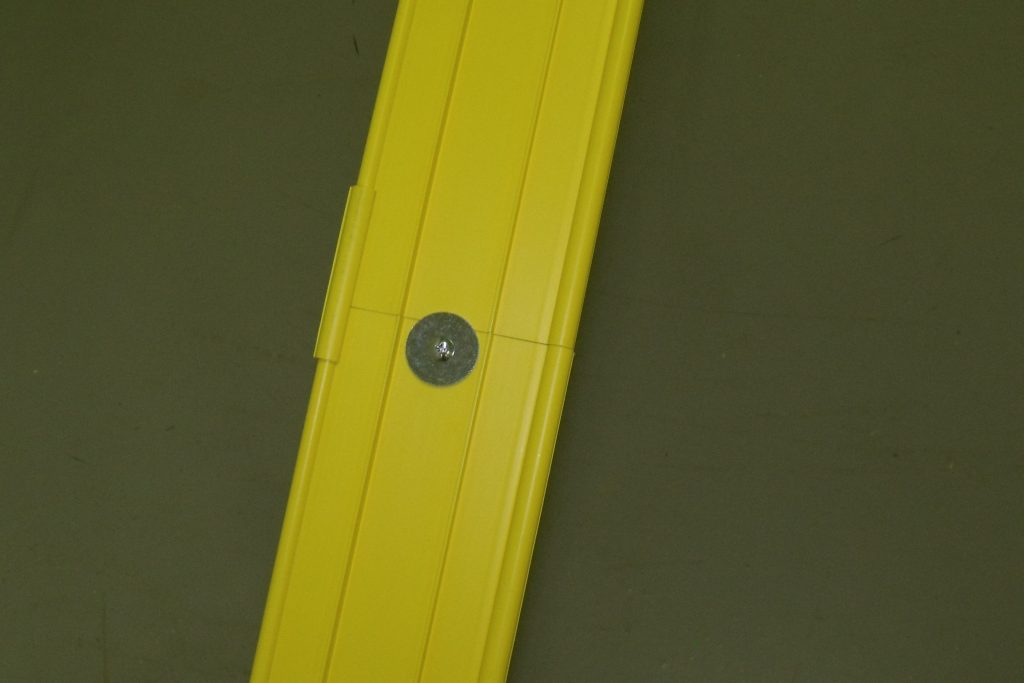
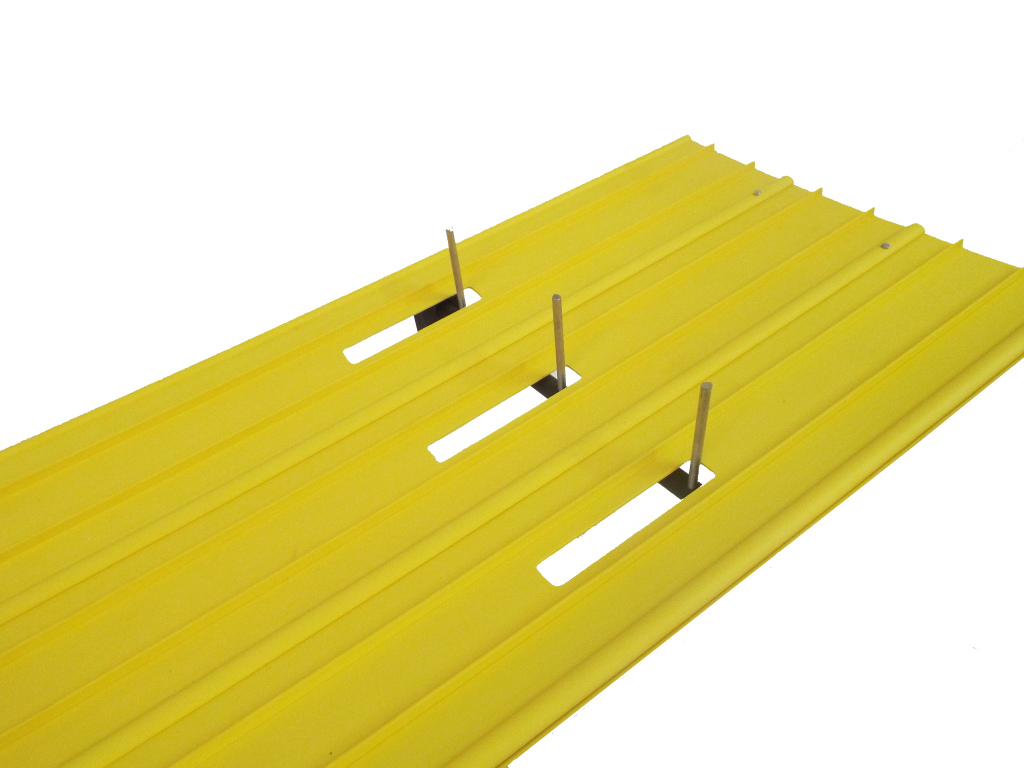
Setup: Derby Magic tracks are built to go together the same way every time. The support frame sets up first, then the numbered track sections (lettered A, B, C… on the underside) slide into place and secure with screws and fender washers — the connector nuts are pressed into the plates at the factory, so alignment is straightforward. The start gate and brake section attach the same way. Keep a Phillips and a flat screwdriver and a small set of wrenches with the track for race morning; full step-by-step instructions come with every track.
Transport: think about whose vehicle moves the track. Ours break down into sections that fit in a standard SUV, minivan, or a sedan with the seats down, and because PVC is lightweight, one volunteer can load and unload the system.
Storage: keep the original shipping boxes — they’re sized to hold the sections safely — and store the track in a cool, dry place. PVC won’t warp from dampness the way wood does, but a climate-controlled spot maximizes longevity and protects the electronic timing components.
Buyer’s Checklist
- Measure your venue for the track, staging, brake area, and spectators (start with the track dimensions).
- Count your racers to pick the lane count (2–3 small, 4 medium, 6–8 large).
- Choose your material — decide whether lightweight, non-warping PVC fits better than heavy wood or dent-prone aluminum.
- Plan for electronics — budget a digital timer and race software so judging is fair and fast.
- Check availability — Derby Magic tracks are made in the USA and kept in stock with short lead times, so you’re not waiting months on overseas shipping.
- Confirm the budget — review current pricing with your treasurer.
Frequently Asked Questions
How many lanes should our pinewood derby track have?
For most Cub Scout packs or youth groups of 30 to 60 kids, a 4-lane track is the ideal balance of excitement and efficiency. Groups under 30 racers do well with 2 or 3 lanes, while large groups or district events of 60+ benefit from 6 or 8 lanes to keep things moving.
Is aluminum or plastic (PVC) better for a pinewood derby track?
Both are fast and neither warps like wood. Many organizations prefer precision PVC because it tends to run quieter, flexes and returns to shape instead of denting if a section is dropped, and stays cooler in the sun. Aluminum is also fast and durable; its main trade-offs are noise and that it can dent if mishandled. The best choice depends on your venue and how you’ll store and transport the track.
How much floor space do we need?
Plan for the track’s length plus about 10 feet: roughly 4 feet for the brake section past the finish line, a few feet behind the start gate for staging, and a few feet to retrieve cars, before adding side room for spectators. So a 32-foot track wants about 42 to 46 feet of clear floor and a 44-foot track about 54 to 58 feet. Our dimensions guide lists exact measurements.
Do we really need an electronic timer?
Yes. Pinewood derby cars cross the finish line fractions of a second apart, and visual judging is prone to error and disputes. An electronic timer gives objective, indisputable results to the thousandth of a second, keeping the race fair for every child.
How does a Derby Magic track go together?
The support frame sets up first, then the numbered track sections slide into place and secure with screws and fender washers, with the connector nuts pressed into the plates at the factory for easy alignment. You’ll want a Phillips and flat screwdriver and a small set of wrenches on hand. Full step-by-step instructions come with every track.
Will a PVC track warp over time?
No. Unlike wood, high-grade precision PVC won’t swell, twist, rot, or warp from humidity or age. Stored properly (avoid a deep freeze followed by rough handling), it holds a flat, fair racing surface for years.
Can we use the track outdoors?
Yes — many groups run outdoor derbies. PVC stays cooler than metal in direct sun and won’t warp from humidity, which makes it well suited to outdoor events. Keep the electronic timer shaded and dry, and let the track acclimate if it’s been stored somewhere very cold.
Does every car get to race in each lane?
With an electronic timer and race-management software, yes. Most software rotates every car through every lane so no one is stuck in a slower lane, which cancels out any tiny lane-to-lane differences and is the fairest way to race.